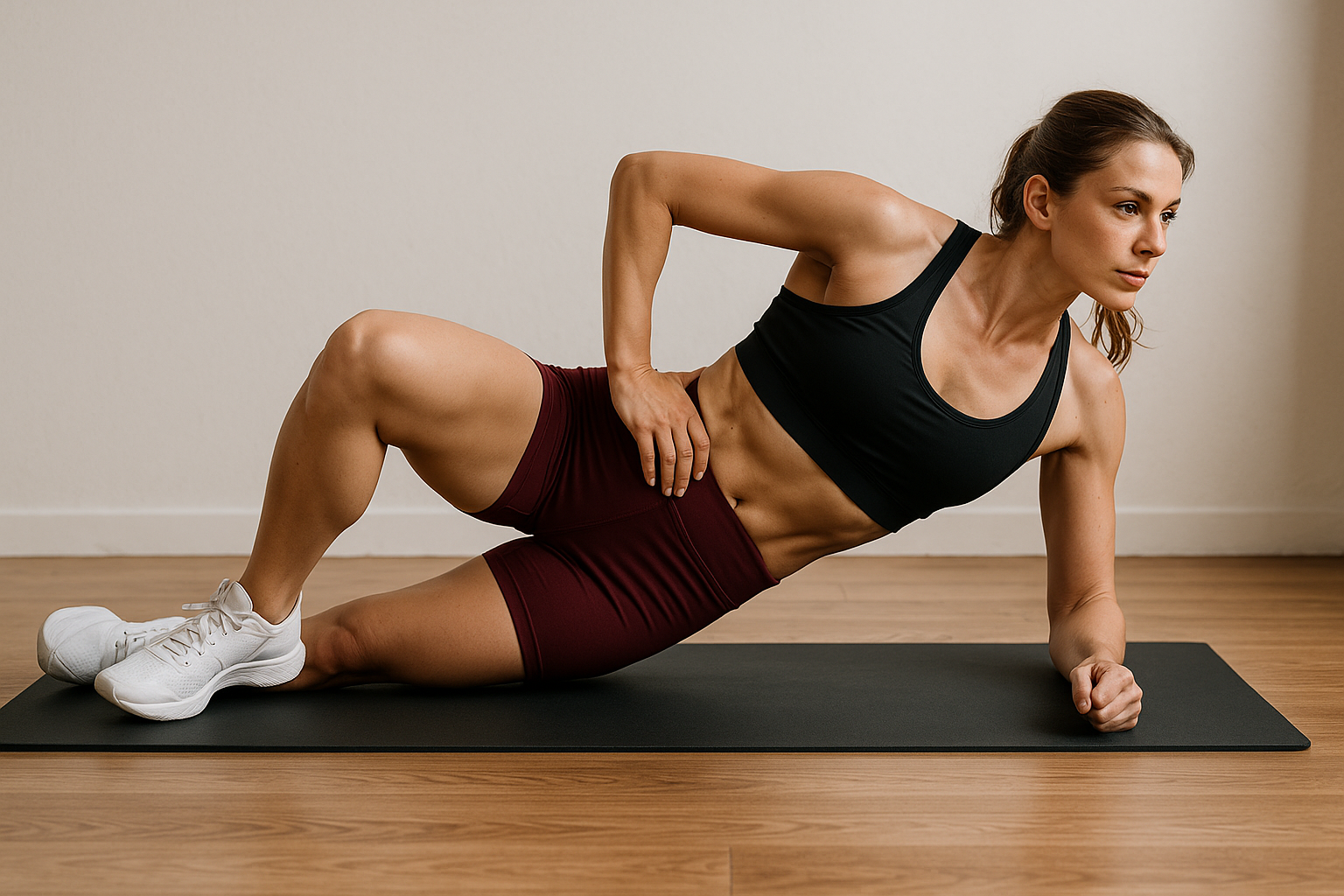
Copenhagen Plank: The Ultimate Core & Oblique Shredder!
The Copenhagen plank is taking the fitness world by storm as one of the most effective (and brutal) core exercises you’re not doing yet. But what makes it so special? Why does it feel impossible at first? And how can you use it to build rock-solid abs while preventing injuries? Let’s break it down as a personal trainer would.
What Is a Copenhagen Plank Good For?
It is the gold standard for building anti-rotation core strength and bulletproofing your obliques. Unlike regular planks that teach you to “hold” a position, this move:
Prevents sports injuries (especially for soccer and hockey players)
Eliminates side core weakness that causes back pain
Dramatically improves rotational power for athletes
Builds hip adductor strength that most people neglect
“After adding Copenhagen planks, my chronic groin pain disappeared, and my deadlift shot up 30lbs!” – Mark, Strength Coach
How to Do the Copenhagen-Plank (Proper Form)
Setup:
- Lie sideways with your bottom elbow directly under your shoulder
- Stack feet and lift hips into the side plank position
- Place the top foot on the bench/box 12-18 inches off the ground
Execution:
- Keep your body in a straight line from your ankles to your shoulders
- Drive the bottom knee toward the bench without touching
- Hold for time (start with 15-30 sec per side)
Pro Tip: Squeeze a towel between your knees to better activate your adductors
Copenhagen-Plank Muscles Worked
| Muscle Group | Activation Level |
|---|---|
| Obliques (side abs) | ★★★★★ |
| Transverse Abdominis | ★★★★☆ |
| Hip Adductors | ★★★★★ |
| Shoulder Stabilizers | ★★★☆☆ |
| Glutes | ★★☆☆☆ |
Why Is the Copenhagen-Plank So Hard?
Most people fail because:
Weak hip adductors (inner thighs)
Poor oblique endurance
Improper breathing (should be diaphragmatic)
It exposes these weaknesses better than any other core exercise
Copenhagen-Plank Progression (From Beginner to Beast)
- Short Lever (knees bent, less range) → 2. Standard → 3. Weighted (plate on hip) → 4. Dynamic (add leg lifts)
3 Game-Changing Copenhagen-Plank Variations
- Rotational – Lift the top arm toward the ceiling
- Pulse – Small up/down hip movements
- Dips – Lower hips slightly, then recover
How Long Should You Hold a Copenhagen-Plank?
Beginners: 3 sets of 15-30 sec per side
Advanced: 3 sets of 45-60 sec per side
Note: Quality > quantity. Stop when the form breaks.
Copenhagen-Plank vs. Other Planks (Difficulty Ranking)
- Copenhagen Plank ★★★★★
- Dragon Flag ★★★★☆
- Ab Wheel Rollout ★★★☆☆
- Standard Plank ★☆☆☆☆
Common Mistakes (That Cause Knee Pain)
Letting hips sag
Placing the top foot too high
Holding breath
Rushing progression
Who Should Avoid Copenhagen-Planks?
Those with acute groin injuries
Beginners without basic core strength
People with shoulder instability
Best Alternatives If You Can’t Do Them Yet
- Side Plank with Knee Drive
- Pallof Press
- Standing Band Adductions
Final Verdict
If you want unshakable core strength that translates to real-world performance, these are non-negotiable. Start with short holds 2-3x/week and watch your oblique strength skyrocket!
Ready to conquer the hardest plank variation? Your abs will thank you!
FAQs about Copenhagen Plank
What are Copenhagen planks good for?
Copenhagen planks primarily target the adductors (inner thigh muscles), while also engaging the core, obliques, and hip stabilizers. They improve hip stability, balance, and overall lower-body strength, making them useful for injury prevention and athletic performance.
Is the Copenhagen plank harder than a side plank?
Yes, the Copenhagen plank is generally harder than a standard side plank because it requires lifting the top leg onto a support (like a bench) while holding your body in a side plank position. This adds significant load to the adductors and challenges balance more intensely.
How long should you be able to hold a Copenhagen plank?
For beginners, holding a Copenhagen plank for 15–30 seconds per side is a good start. More advanced individuals may hold it for 45–60 seconds or longer, depending on strength and stability.
Which is the hardest plank to do?
The hardest plank variation depends on your strength and experience, but some of the most challenging include:
- Extended plank (arms fully stretched forward)
- Plank with leg lifts or weight
- Copenhagen plank for inner thigh engagement
- Plank to push-up variations
These variations increase load, balance demands, and core activation compared to a standard plank.