Exercise for Perimenopause: A Plan for Thriving Through Change
Understanding Perimenopause and the Power of Exercise
This stage of life can feel confusing. You’re experiencing so many new symptoms and hormone changes that can throw you off. But here’s the good news: smart exercise for perimenopause can be a game-changer. It’s a powerful tool for managing symptoms and helping you feel strong and in control.
This guide will provide a balanced exercise routine. It is designed to help with common issues like weight gain, sleep quality, and mood swings.

The Foundation – Why Specific Exercise Matters
Let’s be clear: a specific exercise for perimenopause plan isn’t just about weight loss; it’s about empowerment. Consistent physical activity helps your body adapt to these new changes. It can counteract a slowing metabolism, for example, which is a common issue.
Regular movement can also help reduce the frequency and intensity of symptoms like hot flashes and night sweats. On top of that, it’s a proven way to reduce anxiety and stress, giving you a powerful tool for better mental health.
Building Your Body – The Power of Strength and Bone Health
You’ve probably heard it before, but it’s worth repeating: strength training for perimenopause is non-negotiable. As we get older, we naturally lose muscle mass, but you can fight back!
Building Muscle and Protecting Bones
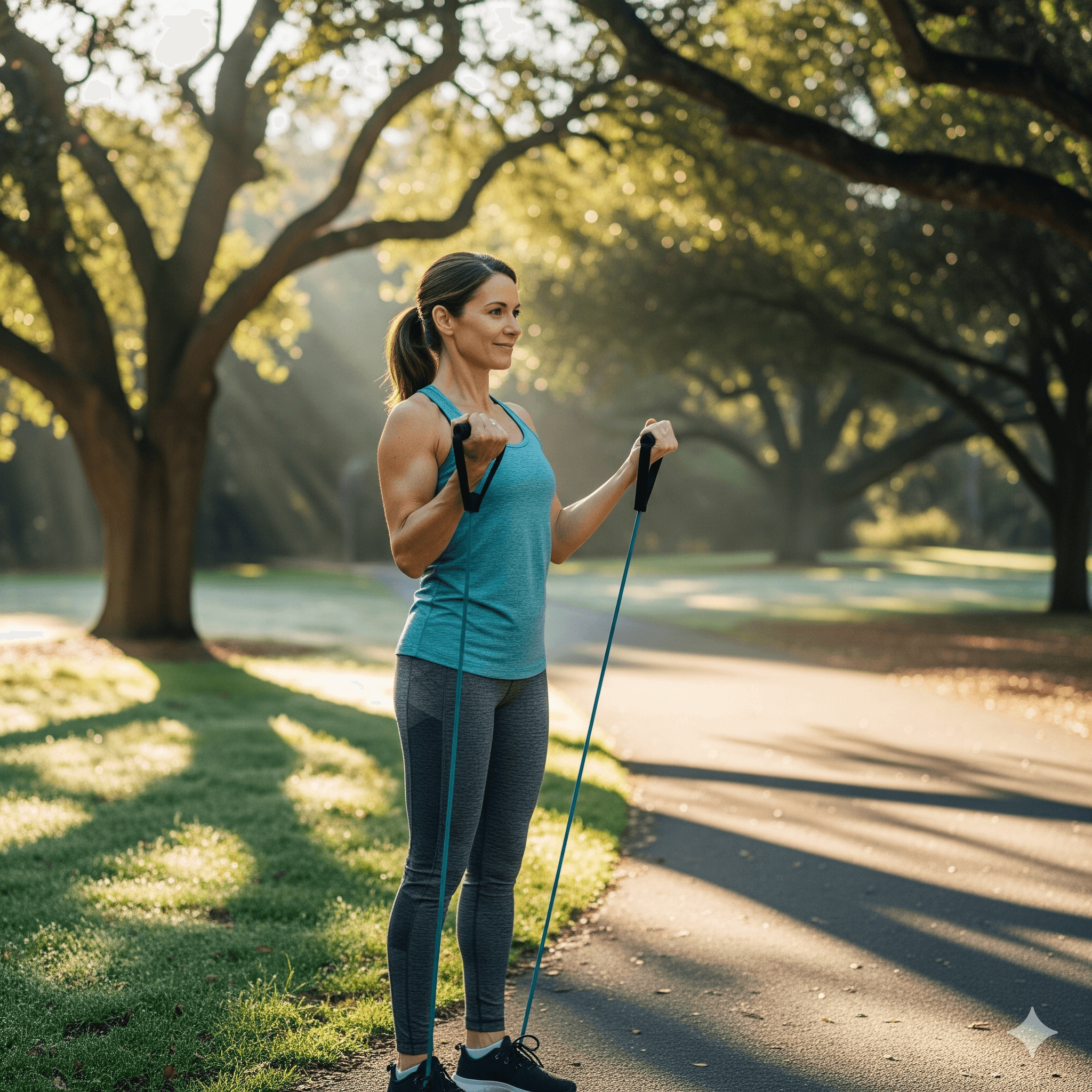
Focus on building muscle during perimenopause to boost your metabolism and keep your body strong. Resistance training is also crucial for improving bone density and combating osteoporosis. You don’t need a gym full of equipment—simple moves like bodyweight squats, lunges, and using light dumbbells can make a huge difference.
The Cardio Component – Heart Health and Weight Management
The right cardio exercise for perimenopause is essential for heart health and can be a big help with weight loss during perimenopause. The key is to find what you enjoy and stick with it.
Your Cardio Options
You have so many great choices here. Low-impact exercises for perimenopause, like brisk walking or swimming, are perfect for managing joint pain. If you want a more intense workout, HIIT for perimenopause can be very efficient, giving you a powerful metabolic boost in a short amount of time.
Mind-Body Connection – Flexibility and Core Strength
Your mental and emotional well-being are just as important as your physical health. Certain practices can greatly improve insomnia and overall sleep quality.
Core and Pelvic Health
Consider adding mind-body workouts to your routine. Yoga for perimenopause can reduce stress and improve flexibility. Pilates for perimenopause builds fantastic core strength and posture, which also directly supports crucial pelvic floor exercises.
Putting It All Together – A Sample Weekly Plan
Finding time to do exercise for perimenopause is a challenge, so here is a sample weekly routine that combines all these elements. Use this as a guide to create a routine that works for you.
| Day | Workout Type | Focus |
|---|---|---|
| Monday | Strength Training | Lower body (squats, lunges, deadlifts) |
| Tuesday | Cardio | Low-impact walk or swim (30-45 mins) |
| Wednesday | Strength Training | Upper body (push-ups, rows, curls) |
| Thursday | Mind-Body | Yoga or Pilates |
| Friday | Cardio | HIIT session or brisk walk (20-30 mins) |
| Saturday | Recovery | Gentle stretching, foam rolling, or rest |
| Sunday | Active Recovery | Leisurely walk or light movement |
Key Takeaways For Exercise for Perimenopause
- Consistency is more important than intensity. Aim for regular, enjoyable movement.
- Don’t skip strength training—it’s vital for your metabolism, muscles, and bones.
- Listen to your body. Adjust your workouts based on how you feel.
- Embrace a variety of exercises to support both your physical and mental health.
Conclusion: Empowering Your Midlife Fitness Journey
Remember, this is a transitional time, not a stopping point. By creating a balanced and consistent routine, you can take control and feel strong and resilient. It’s about turning peri-menopause into a time of strength and self-care.
What part of this plan are you most excited to try, or what’s the biggest challenge you’ve faced with midlife fitness so far?
References and Resources
- The North American Menopause Society, “Exercise and Menopause.”
- National Institute on Aging, “Menopause: A Time for Health.”
- Mayo Clinic, “Perimenopause.”
- Harvard Medical School, “The Best Exercises for Your Menopause.
FAQs About Exercise for Perimenopause
What is the best workout for perimenopause?
The best workout for perimenopause is a mix of strength training, cardio, and flexibility exercises. Strength training keeps muscles and bones strong. Cardio helps your heart and manage weight. Yoga or Pilates lowers stress and improves balance. A well-rounded routine works best for managing symptoms.
Can exercise reduce perimenopause?
Exercise cannot stop perimenopause, but it can reduce its symptoms. Regular activity helps with hot flashes, mood swings, sleep problems, and weight gain. Staying active also lowers the risk of osteoporosis and heart disease, which become more common during this stage.
What is the best exercise to lose the perimenopause belly?
Strength training combined with interval cardio is most effective for losing perimenopause belly fat. Lifting weights boosts metabolism and preserves lean muscle, while HIIT (high-intensity interval training) helps burn stubborn abdominal fat. Adding core-focused exercises like planks and Pilates can also strengthen the midsection.
What not to do during perimenopause?
Avoid extreme dieting, skipping strength training, and ignoring rest. Over-exercising or relying only on cardio can increase fatigue and stress hormones. Highly processed foods, excess alcohol, and poor sleep also make symptoms worse. A balanced approach with proper recovery is key.