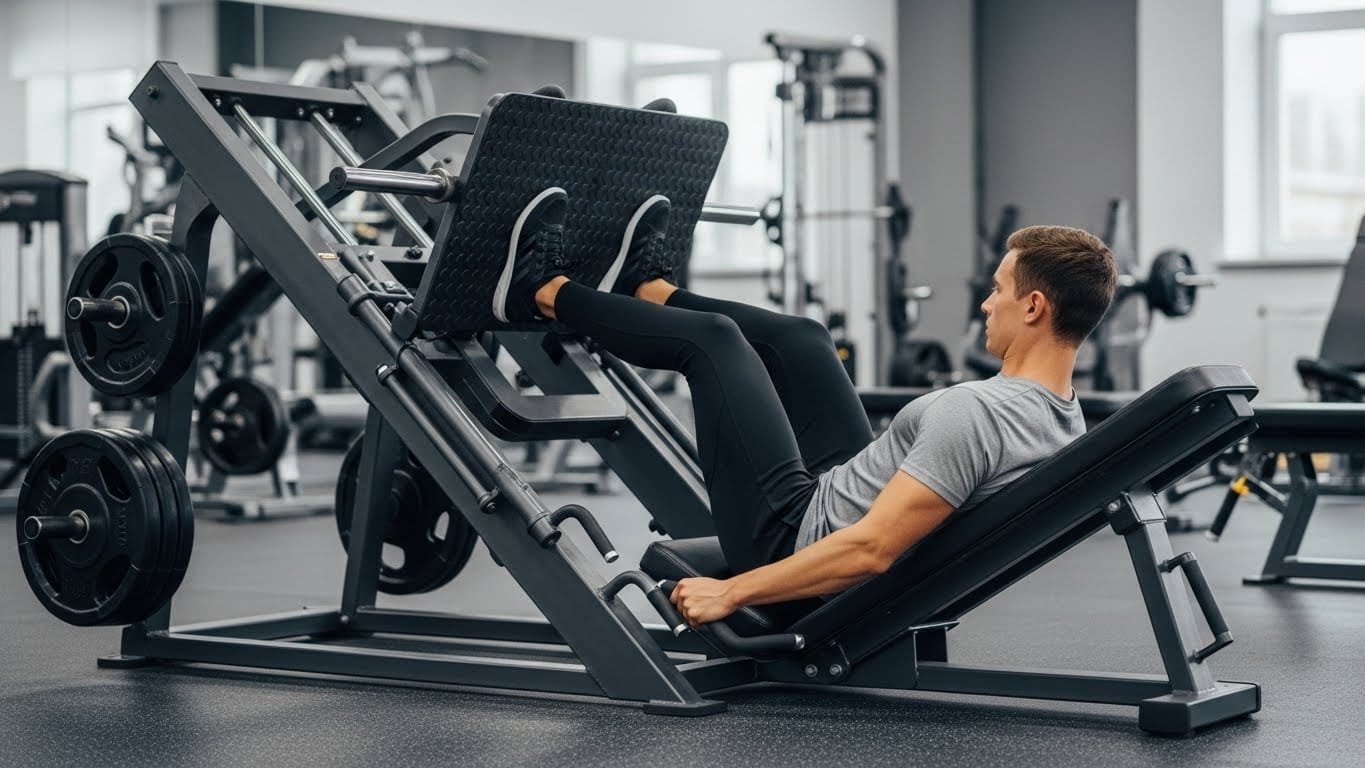
Horizontal Leg Press: Muscles Worked, Proper Form, Benefits, and Foot Placement
What Is the Horizontal Leg Press?
The horizontal leg press is an easy exercise for beginners. It helps strengthen the lower body and is done on a seated leg press machine. Unlike the 45-degree leg press, this version keeps your torso upright and your back fully supported, which reduces spinal load and improves overall control.
The horizontal leg press exercise follows a set path. This helps you focus on using your muscles, keeping good form, and controlling the resistance. This makes it a reliable option for beginners, older adults, and anyone looking for knee-friendly leg exercises.
Muscles Worked by the Horizontal Leg Press
The horizontal leg press is a compound lower-body exercise that targets multiple muscle groups at once.
Primary muscles worked:
- Quadriceps muscles are responsible for knee extension
- The gluteus maximus supports hip extension
- Hamstrings assisting during the eccentric phase
Secondary muscles involved:
- Hip stabilizers
- Core muscles that help maintain posture
By changing where you place your feet on the leg press, you can focus more on strengthening your quadriceps. This can also help activate your glutes and engage your hamstrings more.
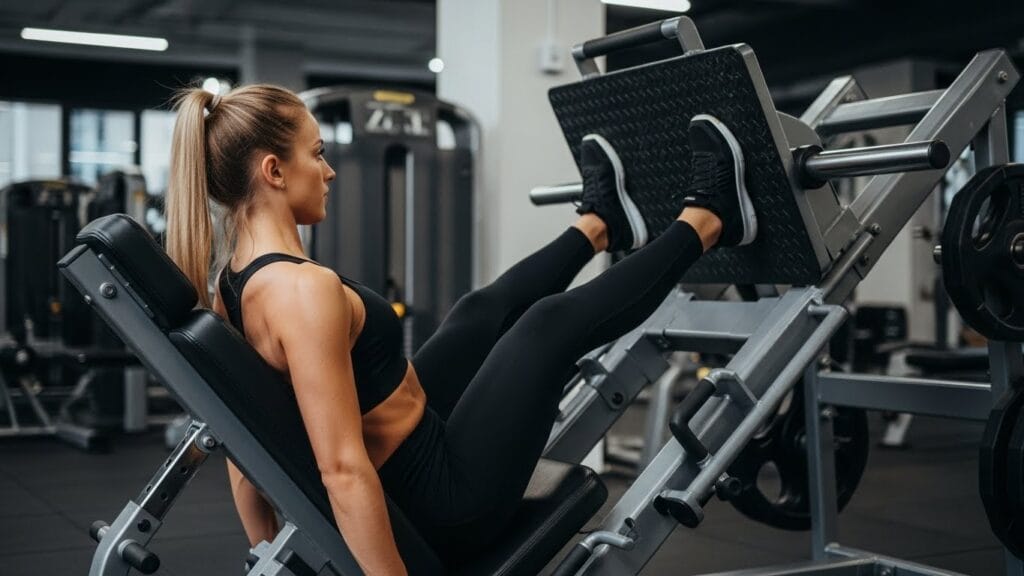
Proper Horizontal Leg Press Form
Using the correct technique improves results while reducing joint stress.
- Sit fully back on the seat with your spine pressed against the pad
- Place your feet shoulder-width apart on the platform
- Keep knees aligned with toes throughout the movement
- Lower the platform using a controlled eccentric movement
- Press through your heels during the concentric phase
- Stop just short of locking out your knees
Maintaining a comfortable leg press range of motion protects knee joint alignment and improves muscle recruitment.
Foot Placement and Muscle Activation
Foot position plays a major role in determining which muscles receive the most tension.
- Standard foot placement provides balanced quadriceps and glute activation
- Higher foot placement increases hamstring engagement and hip involvement
- Lower foot placement places greater emphasis on the quadriceps
This adaptability makes the leg press workout effective for different lower-body training goals.
Benefits of the Horizontal Leg Press Machine
The horizontal leg press machine benefits lifters across all experience levels.
- Supports lower body hypertrophy without heavy spinal loading
- Offers a safer alternative to free weight squats
- Allows precise resistance training for legs
- Ideal for high-volume training and controlled progression
- Works well as a leg press alternative to squats during deloads or rehab phases
The seated leg press design makes it easier to focus on muscle contraction rather than balance.
Horizontal Leg Press vs Squat
When comparing the leg press vs squat, both exercises serve different purposes.
Squats require full-body coordination, core stability, and mobility. The leg press exercise isolates the lower body more directly, making it useful when the goal is muscle growth, joint-friendly training, or fatigue management.
Many programs include both movements to support complete lower-body strength development.
How to Program the Horizontal Leg Press
For strength and muscle growth, the following structure works well:
- Sets: 3 to 5
- Reps: 8 to 15
- Rest: 60 to 90 seconds
- Focus on progressive leg press training volume
Use moderate loads that allow full control and consistent tempo.
Horizontal Leg Press Safety Tips
- Avoid excessive weight on the leg press machine
- Never allow the knees to collapse inward
- Keep movement smooth and controlled
- Stop immediately if knee or hip discomfort occurs
- Prioritize form over load for long-term progress
Final Takeaway
The horizontal leg press is a versatile and effective tool for building lower-body strength, supporting muscle growth, and maintaining a joint-friendly training approach. This leg press variation is good for everyone. It works well for beginners and those with advanced training. It helps create a balanced lower-body workout.
FAQs
What muscles does the horizontal leg press work?
The horizontal leg press primarily targets the quadriceps, glutes, and hamstrings, making it an effective compound exercise for lower-body strength training.
Is the horizontal leg press safe for knees?
Yes. When proper form, knee alignment, and controlled range of motion are maintained, it is considered one of the most knee-friendly leg exercises.
What is the best foot placement for the horizontal leg press?
A shoulder-width stance with heels flat on the platform provides balanced muscle engagement for most lifters.
Horizontal leg press vs 45-degree leg press, which is better?
The horizontal leg press offers more spinal support, while the 45-degree leg press allows heavier loading. The best option depends on training goals and joint comfort.
Is the horizontal leg press good for beginners?
Yes. The guided movement and seated position make it ideal for beginners learning proper lower-body movement patterns.
What does the horizontal leg press work?
The horizontal leg press primarily works the quadriceps, glutes, and hamstrings. It also engages hip stabilizers and supporting muscles that help maintain proper knee and hip alignment. Because the movement follows a fixed path, it allows focused lower-body strength training while reducing stress on the lower back.
Is the 45-degree leg press better than the horizontal leg press?
The 45-degree leg press is not better for everyone. It allows heavier loading and greater hip involvement, which may benefit advanced lifters focused on strength or muscle growth. The horizontal leg press offers more spinal support and controlled movement, making it a better choice for beginners, joint-friendly training, or rehabilitation-focused workouts.
Is the leg press better than squats?
The leg press is not better than squats, but it serves a different purpose. Squats train the entire body and require balance, coordination, and core stability. The leg press isolates the lower body more directly, making it useful for building leg strength, increasing training volume, or reducing spinal loading. Many effective programs include both exercises.
What is the best type of leg press?
The best type of leg press depends on your goals and physical needs. The horizontal leg press is ideal for beginners and knee-friendly workouts. The 45-degree leg press supports heavier weights and advanced hypertrophy training. Vertical leg press machines are less common and require more experience. Choosing the best option comes down to comfort, joint health, and training objectives.