How Does Scar Tape Work? Understanding the Science Behind Silicone Healing
Scars are a natural part of the body’s healing process, but their appearance can vary depending on how the skin heals. Scar tape is a silicone-based medical strip designed to improve the appearance of scars after surgery, injury, or other skin trauma.
Unlike regular bandages that simply protect the skin, it helps regulate how the skin repairs itself. It’s commonly used by dermatologists and surgeons to manage new scars and reduce the visibility of existing ones.
Most scar tapes are made from medical-grade silicone, a safe, non-irritating material proven to support healthy scar formation.
How Does Scar Tape Work?
It works by creating a protective, breathable layer that maintains moisture balance and helps the skin heal evenly.
Here’s what happens beneath the surface when you use it:
- Hydration Balance:
Silicone reduces water loss from the skin. This keeps the scar area hydrated, which softens and flattens the tissue. - Collagen Regulation:
When the skin is dry or inflamed, it can produce too much collagen, leading to raised scars. Silicone helps control collagen production, so new tissue forms more smoothly. - Protection from Irritation:
Scar tape shields the healing area from friction, bacteria, and UV exposure — all of which can worsen scarring. - Temperature and Oxygen Flow:
The tape allows oxygen to pass through while keeping the skin slightly warmer. This stable environment helps new skin cells develop in a controlled way.
In short, scar tape doesn’t “erase” scars but helps the body heal in the most natural and balanced way possible.
The Science Behind Silicone and Scar Healing
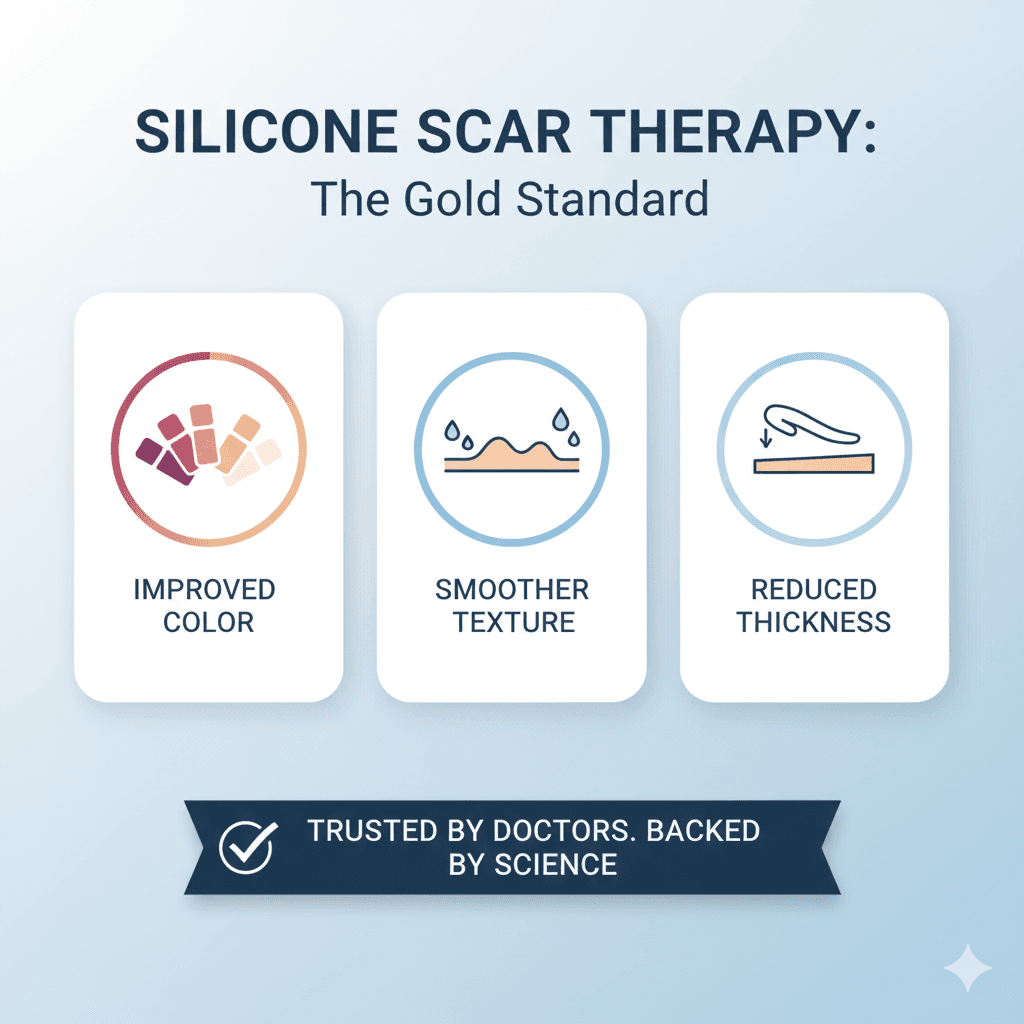
Silicone has been used in medical care for decades, especially in post-surgical recovery. Research consistently shows that silicone gel sheets and scar tapes can significantly improve scar color, texture, and thickness.
Here’s what science says:
- Silicone helps retain moisture in the outer skin layers, preventing excessive collagen buildup.
- It reduces redness and itching, common during scar formation.
- Over time, it can help flatten and fade both new and old scars.
These effects have made silicone scar tapes one of the most recommended non-invasive treatments by dermatologists and plastic surgeons worldwide.
When to Use Scar Tape
Timing matters when it comes to scar care.
It should only be applied after the wound has fully closed — never on open, bleeding, or scabbed skin.
You can use it on:
- New scars (after stitches are removed or skin is fully healed)
- Post-surgical scars, such as C-section or orthopedic incisions
- Old scars that remain thick or raised
- Minor injury or burn scars
Most dermatologists recommend starting silicone therapy as soon as it’s medically safe, since early use often leads to better long-term results.
How to Apply Scar Tape Properly
To get the best results, follow these steps:
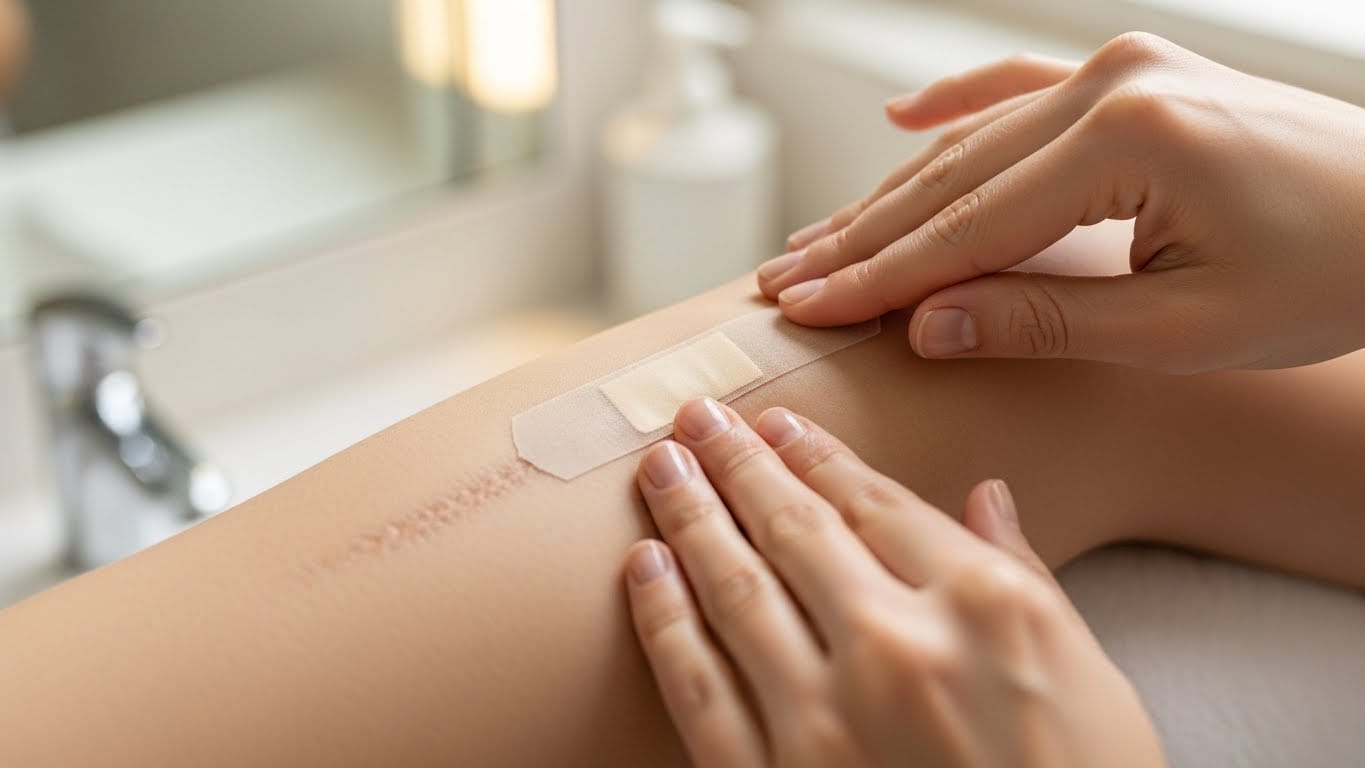
- Clean and dry the scar area completely.
- Cut the scar tape to fit the scar’s length and shape.
- Apply gently, ensuring there are no wrinkles or air bubbles.
- Leave the tape on for 12 to 24 hours a day.
- Replace daily, or wash and reuse if the tape is reusable.
Consistency is key. Using scar tape regularly for several weeks allows the silicone to maintain a stable healing environment for your skin.
How Long Does It Take to Work?
Visible improvement often begins within 4 to 8 weeks of consistent use.
New scars may respond more quickly, while older scars or thicker keloids may require several months of treatment. The overall healing timeline depends on your skin type, scar size, and how faithfully you use the tape.
For post-surgery or major injuries, dermatologists often recommend using silicone scar tape for at least 8 to 12 weeks.
Which Scars Benefit Most from Silicone Tape
It can help manage a variety of scar types, including:
- Surgical scars (C-section, orthopedic, plastic surgery)
- Injury or accident scars
- Acne scars (particularly raised ones)
- Burn scars
- Hypertrophic or keloid scars
While silicone works for most scars, flat, older scars may show more subtle improvements. Still, consistent use helps maintain even skin texture over time.
Common Mistakes to Avoid
To make sure scar tape works effectively, avoid these common issues:
- Applying it to an unhealed wound
- Using on dirty or oily skin
- Removing too early or inconsistently
- Skipping days, which disrupts the healing process
For best results, clean the skin daily and stick to a consistent routine.
Final Thoughts
It is one of the most effective, non-invasive ways to manage and improve scar healing.
Maintaining moisture balance and protecting the skin helps regulate collagen production — the key factor behind how a scar looks and feels.
If you’re recovering from surgery, injury, or acne scars, using medical-grade silicone scar tape consistently can help your skin heal smoothly and more evenly. It’s a simple, science-backed solution that supports your body’s natural healing process.
Frequently Asked Questions
1. Do scar tapes work on old scars?
Yes. Silicone can still improve the appearance of older scars by softening and lightening them. However, it may take longer compared to new scars.
2. Can I wear scar tape while showering?
Many medical-grade scar tapes are waterproof and can stay on during showers, but always check the product label before doing so.
3. How long should I use scar tape?
Most dermatologists recommend using scar tape daily for 8–12 weeks, or longer if the scar is thick or raised.
4. Is scar tape safe for sensitive skin?
Yes. Silicone is non-toxic, hypoallergenic, and safe for sensitive or post-surgical skin.
5. Can scar tape prevent scars completely?
While it can’t always prevent a scar from forming, it helps the skin heal in a controlled environment that reduces excessive scarring.